
Bringing Two Leading Voices on Animal Advocacy to Thai Readers
Sinergia Animal Thailand supports Thai editions of works by Peter Singer and Tobias Leenaert, making leading ideas on ethical action and food-system transformation more accessible.
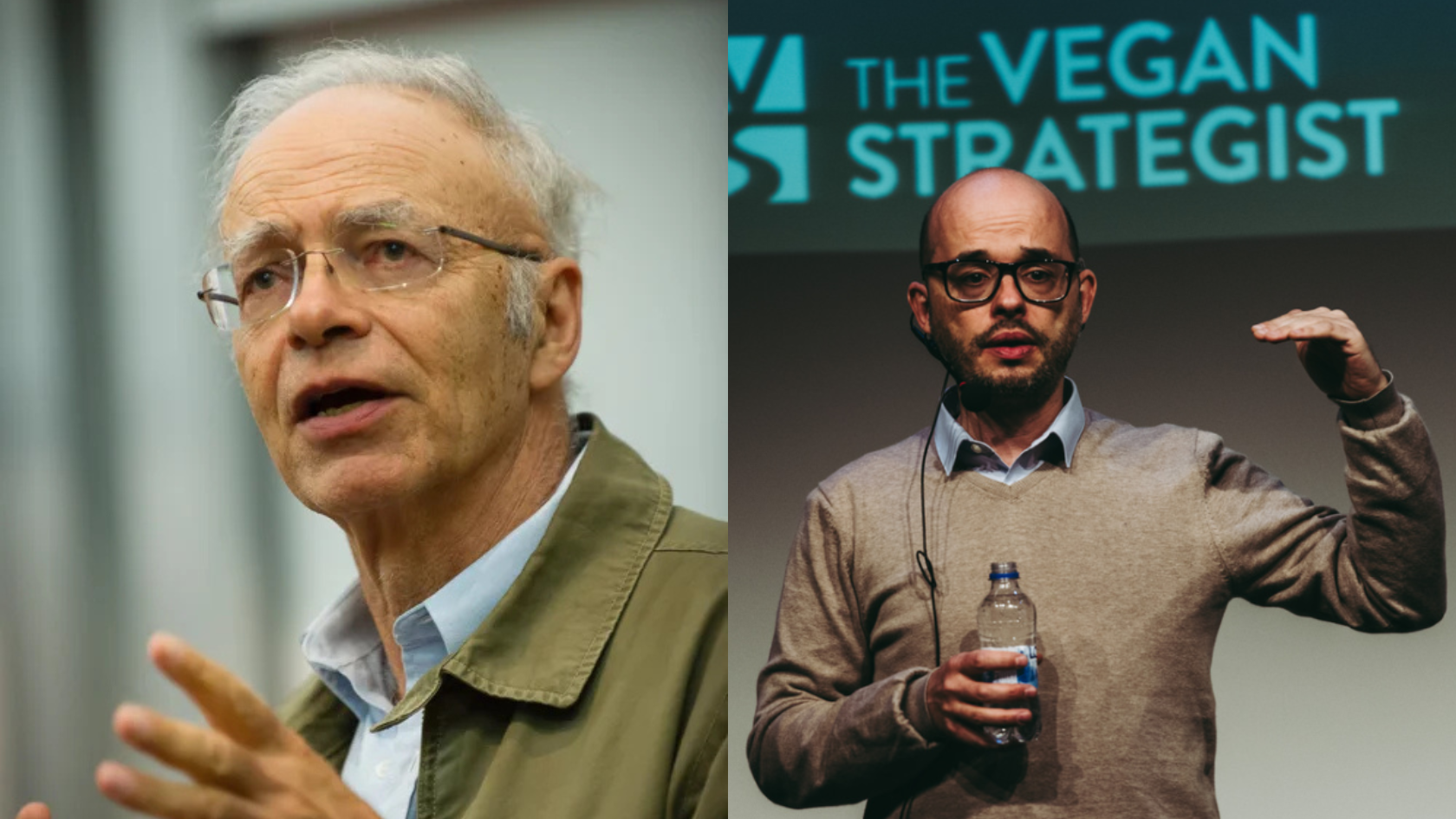
Peter Singer and Tobias Leenaert
Two influential books exploring how advocates can create meaningful change for animals are reaching a wider audience in Thailand.
In 2025, Sinergia Animal supported the Thai-language publication of Ethics Into Action, Peter Singer’s account of the life and work of pioneering animal advocate Henry Spira. This effort continued in 2026 with the Thai edition of Tobias Leenaert’s How to Create a Vegan World: A Pragmatic Approach.
Although they approach advocacy from different perspectives, both books emphasize the importance of strategy, public engagement, and achievable progress.
Ethics Into Action examines how Spira transformed ethical concerns into focused campaigns that secured tangible improvements for animals. How to Create a Vegan World, meanwhile, explores how practical and inclusive approaches can encourage more people to participate in changing the food system.
“Through these books, we hope to make influential ideas on ethical action, advocacy, and food-system change more accessible to Thai readers. Meaningful change does not always have to begin with a dramatic transformation. It can also begin with learning, greater understanding, and the decisions people make in their everyday lives.”
— Saneekan Rosamontri, Managing Director of Sinergia Animal Thailand.
What Henry Spira Can Teach Today’s Advocates
Written by philosopher and author Peter Singer, Ethics Into Action documents the campaigns of Henry Spira, who spent the final 25 years of his life working to improve the treatment of animals in laboratories and factory farms.
Before becoming an animal advocate, Spira supported Black communities during the civil rights era in the American South and workers who were being failed by trade union leadership. These experiences shaped the methods he later applied to animal advocacy.
Singer described Ethics Into Action as a “handbook for activists, not just in the animal movement, but for many other ethical causes as well.”
“Henry Spira spent his entire life working for those who were exploited in various ways,” Singer explained. “This background enabled him to develop methods that can work for many different ethical causes.”
Spira’s approach included speaking with people outside the movement, identifying concerns that already had broad public support, and selecting campaign targets where progress could realistically be achieved.
Singer believes the book’s central message remains relevant to advocates in 2026, even though the tools available to them have changed.
“The message is the same. What has changed is the means of spreading that message, because of course now we have social media and AI. It is up to today’s generation of activists to adapt the essential message of the book to these new factors.”
Singer also emphasized the importance of supporting effective animal advocates in Asia, Africa, and Central and South America, where he said animal exploitation, particularly the expansion of factory farming, is growing most rapidly.
Why Progress Matters More Than Perfection
In How to Create a Vegan World: A Pragmatic Approach, author and animal advocate Tobias Leenaert presents a practical vision for building a more effective movement, one that prioritizes meaningful, achievable progress over ideological perfection.
Rather than presenting veganism as an all-or-nothing identity, the book examines how advocates can encourage people to make positive changes at different levels and according to their own circumstances. It also considers how availability, affordability, taste, culture, health, and environmental concerns shape the choices people make.
In written responses provided to Sinergia Animal, Leenaert said the central message he hopes Thai readers will take from the book is that impact matters more than personal perfection.
“What matters most is not our own purity, but our impact. The goal of the book, and of my work in general, is not to create a small group of perfect vegans, but to help as many people as possible move in a good direction, each at their own pace.”
For Leenaert, this principle changes how advocates approach behaviour change. A large number of people reducing their meat consumption may have a greater overall impact than a much smaller number becoming fully vegan. It also means recognizing every positive step rather than criticizing people for not changing everything at once.
People may initially reduce their meat consumption because of health, environmental concerns, or simply because appealing plant-based food is available. Their concern for animals may develop later. Leenaert argues that advocates should welcome these different motivations rather than insisting that everyone enter the movement through the same path.
“There are many doors into the room, and our job as advocates is to open as many doors as possible rather than guarding one narrow entrance,” he told Sinergia Animal.
Leenaert believes this flexible approach may be particularly well suited to Thailand. While the book was written from a Western perspective, he noted that advocacy strategies need to be translated culturally as well as linguistically.
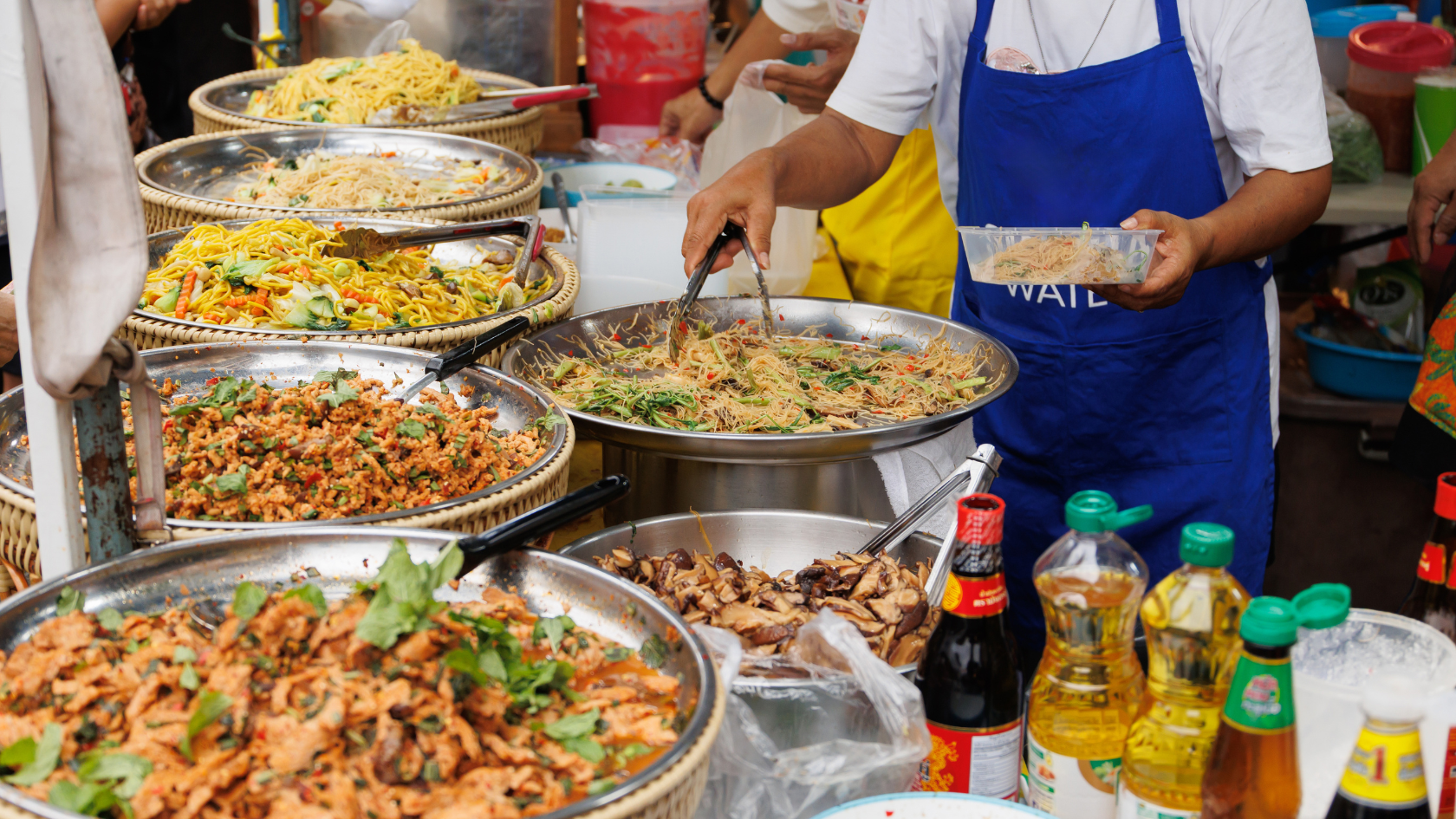
Vegan street food during J Festival in Thailand
Thailand already has traditions of periodic meat avoidance, Buddhist ideas of compassion for sentient beings, and a food culture in which vegetables, tofu, rice, and noodles have long played a central role. Leenaert therefore believes advocates in Thailand can build on existing cultural practices rather than importing an all-or-nothing model of vegan identity from the West.
He also highlighted the importance of making plant-based options widely available, affordable, and enjoyable. As a major global food producer with an expanding alternative-protein sector and an internationally celebrated cuisine, Thailand has the potential not only to follow global food trends, but to help lead them.
These ideas are particularly relevant as Asia is expected to play a major role in determining the future of the global food system. Leenaert warned that following the Western path of increased industrial animal production would have significant consequences for animals, the climate, public health, and pandemic risk.
At the same time, he sees an opportunity for countries in the region to build modern food systems around plant proteins and future alternatives without repeating the mistakes made elsewhere.
“My hope is that the Thai edition of my book helps a new generation of advocates, in Thailand and across the region, to be both deeply committed and strategically smart: relaxed about how people get there, ambitious about where we’re going,” Leenaert said in his responses to Sinergia Animal.