
Sinergia Animal Brings Animal Protection to Brazil's National Congress
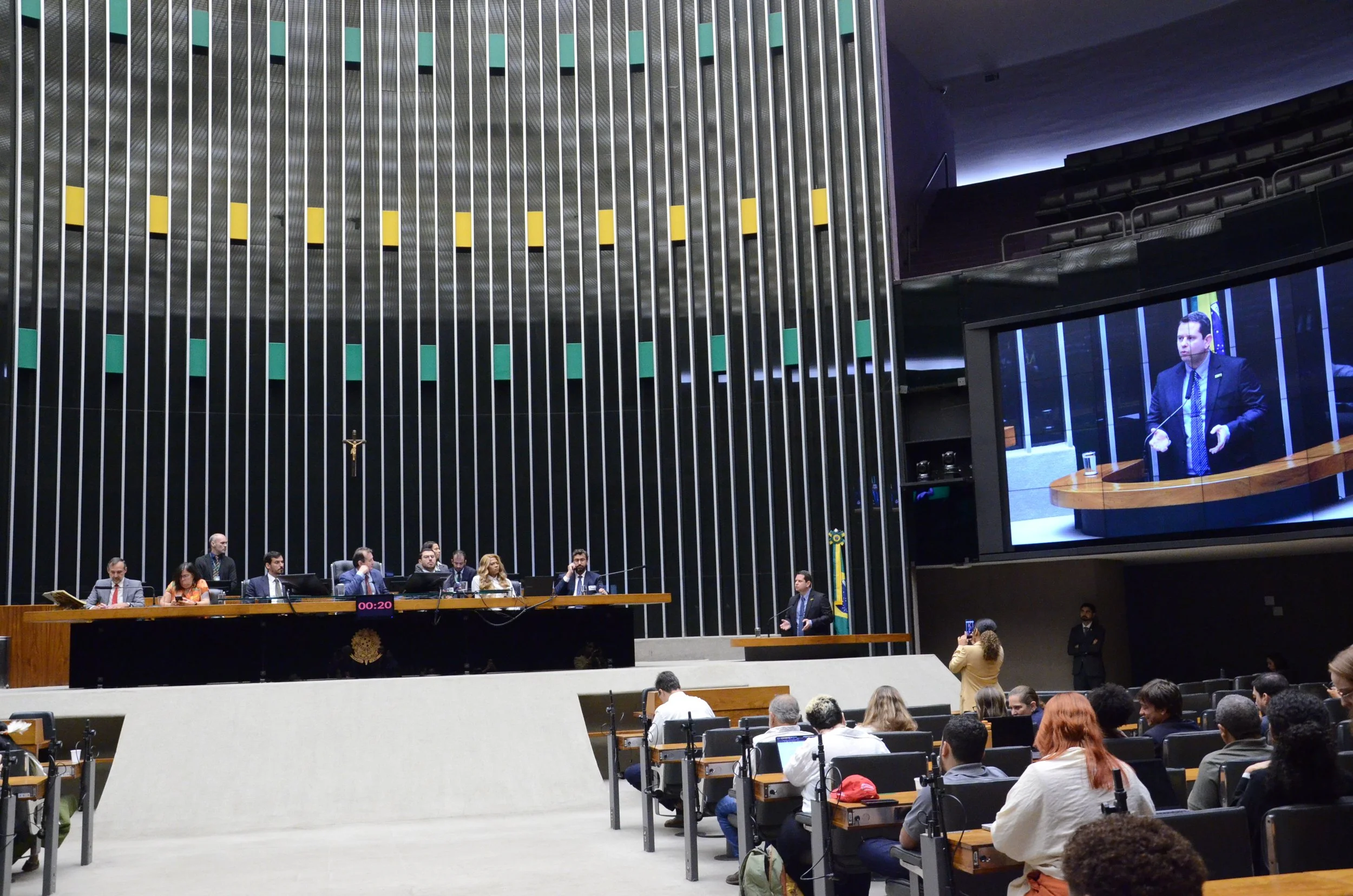
Arthur Regis speaking during a Special Session in Brazil's Chamber of Deputies
Brazil, July 14, 2026 — Sinergia Animal visited Brazil's National Congress to ensure that the interests of animals were represented in key discussions and political decision-making spaces.
Representing the organization, Arthur Regis, Public Policy Specialist at Sinergia Animal, participated in institutional activities at the Chamber of Deputies, gave an interview to TV Câmara, and met with lawmakers and parliamentary advisors to discuss animal welfare in food production.
Bringing Animals' Interests to the Chamber of Deputies
As Sinergia Animal's representative, Arthur Regis took part in a Special Session held in honor of World Environment Day at the Chamber of Deputies.
During the session, he highlighted the importance of including animals in discussions on sustainability and public policy, emphasizing that food systems and environmental protection are inseparable from the way billions of animals are raised every year.
The presence of civil society organizations in institutional spaces is essential to advancing the conversation on food systems that are more just, sustainable, and compassionate—for animals, people, and the planet.
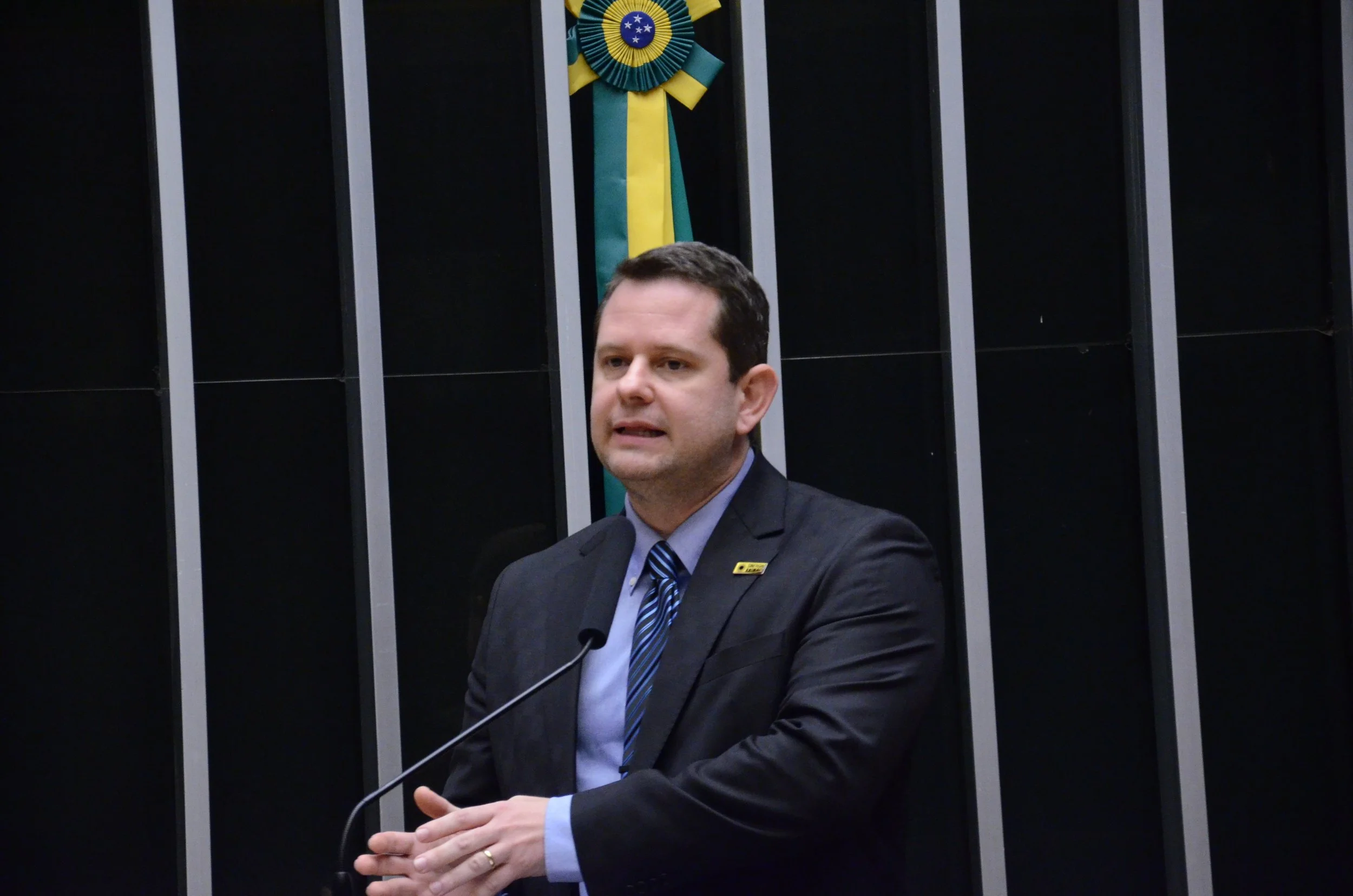
Arthur Regis, Public Policy Specialist at Sinergia Animal Brazil
Foie Gras Banned by Brazil's Congress
In addition to participating in the special session, Arthur was interviewed by TV Câmara about animal protection issues, with a particular focus on a bill to ban the production of foie gras obtained through the force-feeding of ducks and geese.
Foie gras production relies on a practice known as gavage, in which birds are repeatedly force-fed by inserting tubes into their throats to enlarge their livers unnaturally. The enlarged liver is then sold as a luxury food product.
Shortly after these discussions, Brazil's Congress approved legislation banning foie gras production, marking a historic victory for animals. The achievement reflects years of advocacy by civil society organizations, lawmakers, and advocates, and Sinergia Animal is proud to have been part of the movement that helped make this progress possible.
Pigs in Focus 2025 Reaches Decision-Makers
As part of its advocacy activities in Brasília, Sinergia Animal also distributed 30 copies of the Pigs in Focus 2025 report to federal lawmakers and parliamentary staff.
Each kit included:
An informational leaflet;
A letter introducing Sinergia Animal's political advocacy work;
Chocolates;
A themed keychain;
A Sinergia Animal tote bag.
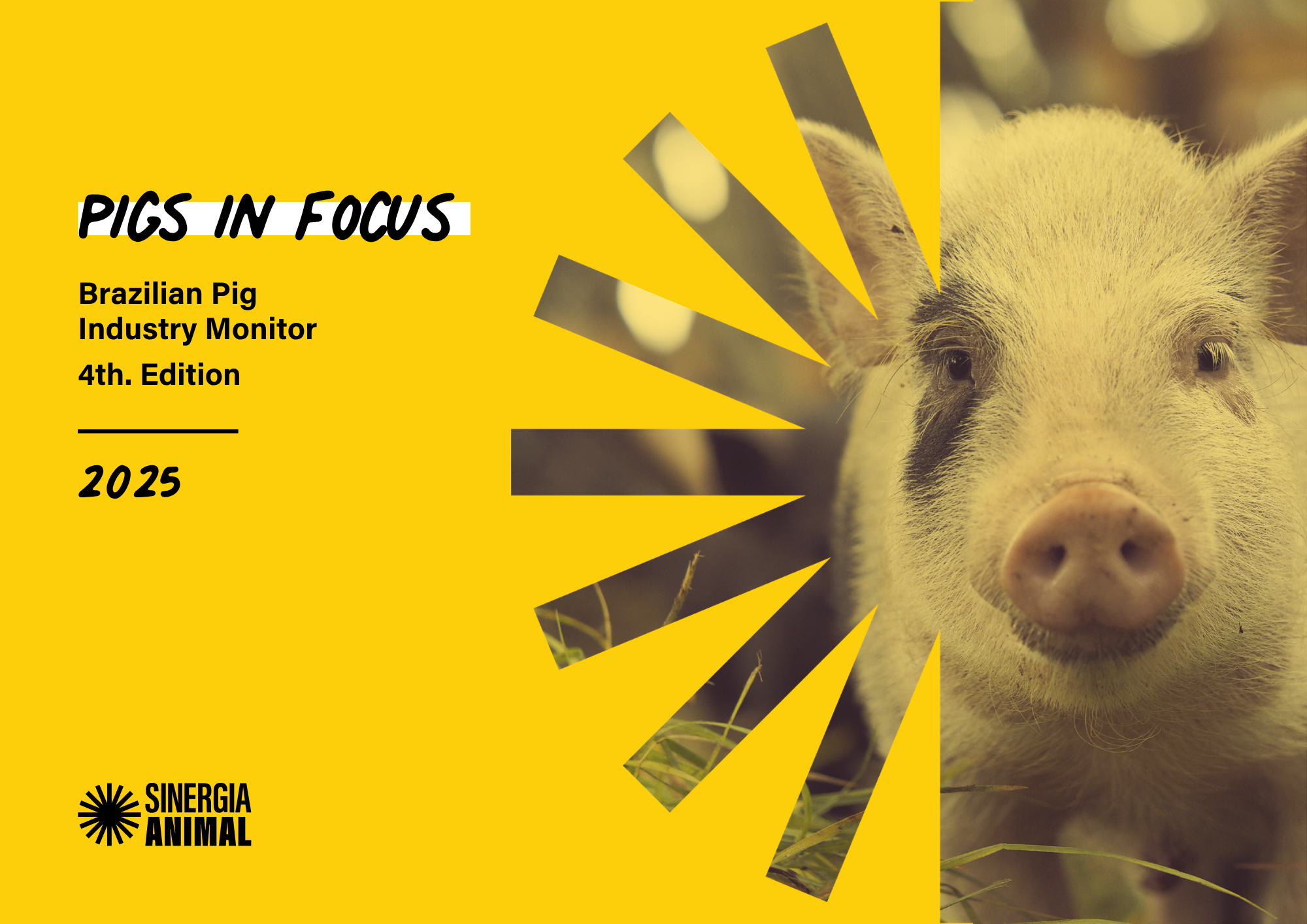
Pigs in Focus Report
The initiative aimed to bring legislators and public policymakers closer to the evidence surrounding industrial pig production in Brazil and the urgent improvements needed to enhance farmed animals' living conditions.
The Pigs in Focus report evaluates the commitments and performance of Brazil's leading pork producers on key animal welfare issues, including the phase-out of gestation crates, transparency, and the implementation of more compassionate food systems.
Political Advocacy for Animals
Meaningful change for animals requires collaboration between companies, governments, and civil society.
Political advocacy is therefore a vital tool for advancing legislation and encouraging public policies that take animals' interests into account when shaping food systems.
Bringing research, data, and evidence to Brazil's National Congress helps strengthen public debate and supports the development of policies that reflect society's growing concern for the treatment of animals.
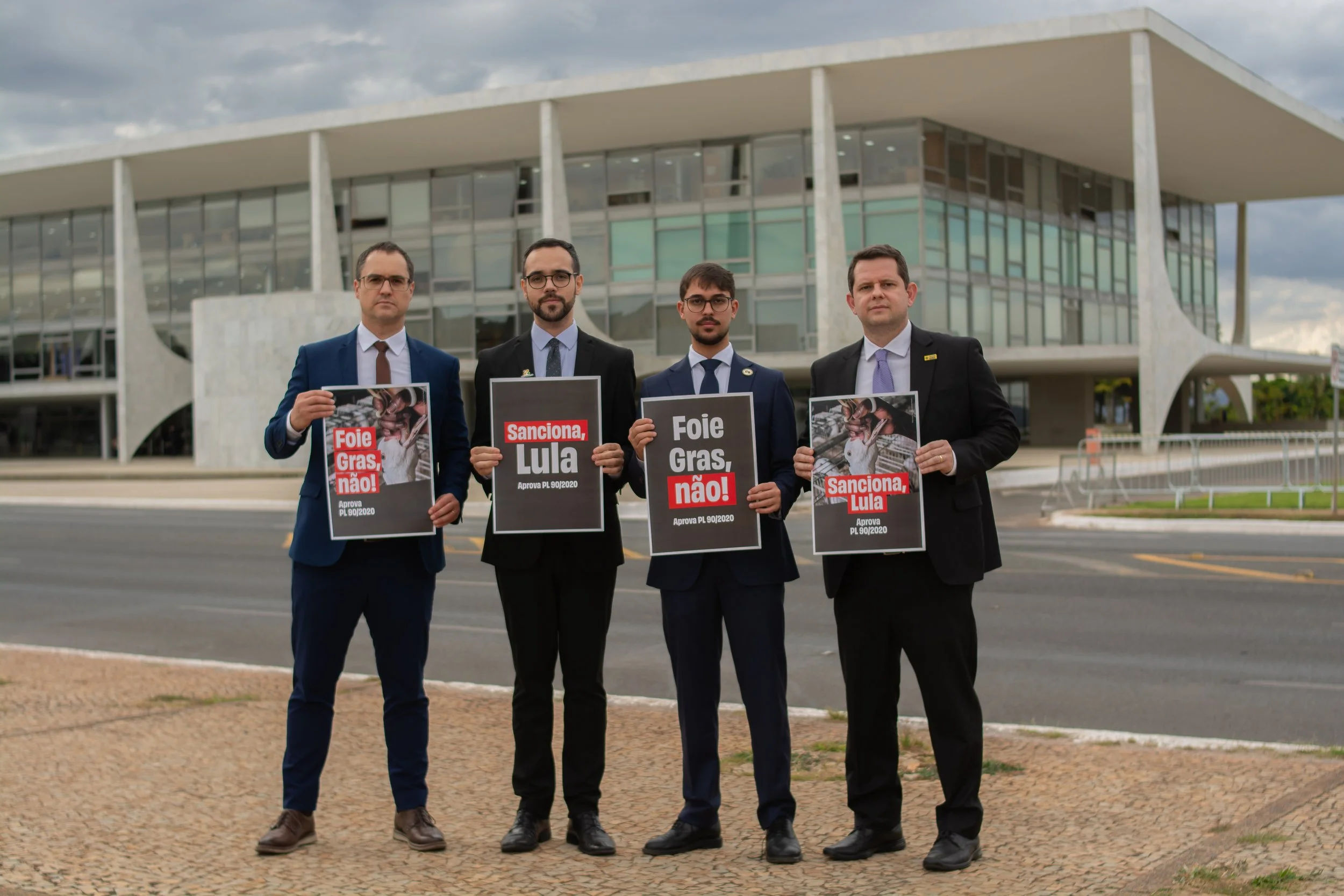
Working Together for Animals
Every conversation with lawmakers, every report delivered, and every opportunity to engage within public institutions represents another step toward improving the lives of animals exploited by the food industry.
This work is only possible through collective action, with one shared goal: building a future where animals are considered in the political, economic, and social decisions that affect their lives.
Because every meaningful change begins when someone brings the voices of animals to places where they have yet to be heard.