
Building Change for Farmed Animals in Asia: Sinergia Animal at AVA Summit Thailand 2026
Whether it’s encouraging companies to switch to cage-free eggs, raising awareness of farmed animal advocacy in Asia, or inviting more people to join the animal advocacy movement, creating change takes time. The challenge is turning interest into meaningful action.
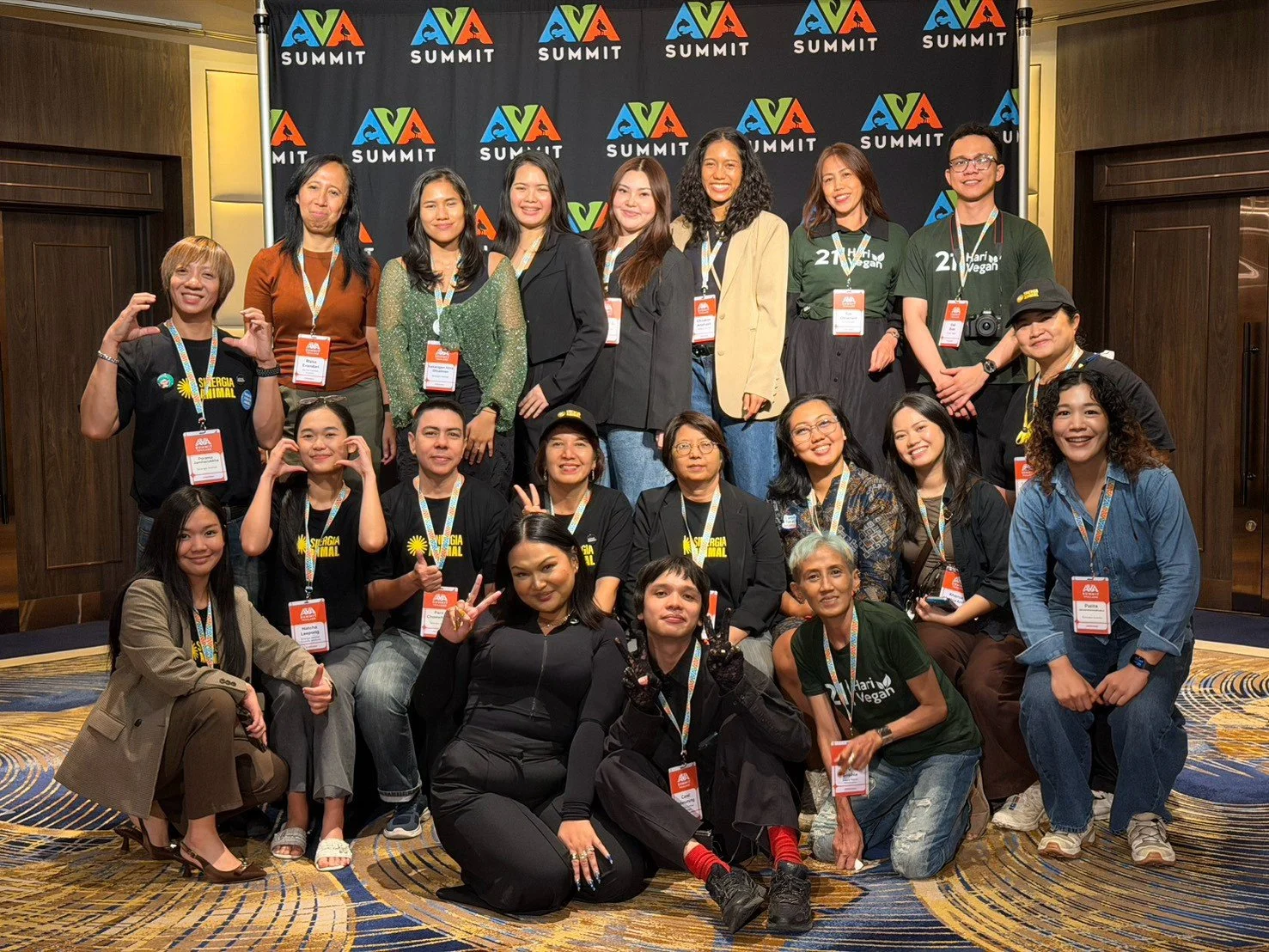
At AVA Summit Thailand 2026, Sinergia Animal shared practical lessons from its work advancing farmed animal welfare in Asia. The discussion explored two complementary approaches to change: engaging people in animal advocacy and working with businesses to advance the transition to cage-free eggs. Both offer important insights into what it takes to move farmed animal welfare forward in Thailand and across Asia.
There Is No One-Size-Fits-All Approach to Creating Change
Animal advocacy looks different in every country. Public awareness, available resources, and local attitudes all influence which approaches are most effective. In Thailand and across Asia, advancing farmed animal welfare means finding ways to bring an issue that often receives little public attention into wider conversations.
Addressing attendees as a keynote speaker at AVA Summit Thailand 2026, Saneekan Rosamontri, Managing Director of Sinergia Animal in Thailand, explained how different approaches can complement one another. Corporate engagement, public campaigns, and media outreach are all important tools for animal advocacy in Thailand, helping bring farmed animal welfare to wider audiences. Knowing how to adapt the message and approach to different situations is an important part of the work.
The same principle applies to building an animal advocacy movement. When volunteers first get involved, participating in street campaigns may feel unfamiliar or intimidating. Rather than expecting everyone to take on the same role, the team offers different ways to participate, allowing volunteers to build confidence and gradually take on greater responsibilities.
What began as a volunteer contact list of fewer than 50 people has grown into a network of more than 150 volunteers supporting campaigns both online and offline.
“We don’t want volunteers to feel that they are simply helping our organization. We want them to feel that they are part of a movement and part of creating change,” Saneekan said.
Her experience highlights why effective advocacy requires more than the courage to speak up. It also means understanding who you want to reach, what messages will resonate, and how best to approach each situation.
As Saneekan put it, “Courage alone is not a strategy.”
Turning Corporate Interest into Progress for Cage-Free Eggs
Engaging the public is one part of advancing farmed animal welfare in Asia. Working directly with businesses is another important approach, creating opportunities to improve conditions for farmed animals through corporate animal welfare commitments.
Piengfah Chumwangwapee, Corporate Engagement Lead for Asia at Sinergia Animal, has worked with companies across the region to encourage the transition to cage-free eggs. Her experience in corporate engagement for animal welfare shows that while initial interest is important, it does not necessarily translate into action.
Companies have different decision-making processes and operational requirements. Common concerns include costs, supplier availability, and the practicalities of changing existing operations. Addressing these challenges requires understanding each company's circumstances rather than assuming the same solution will work for everyone.
As Piengfah emphasized, “Interest is not the same as progress.”
The first step is to understand what is holding a company back. Cost concerns may require a closer look at transition expenses, while supply constraints may call for further research into available producers. Other challenges may involve coordinating with procurement teams or assessing how changes could be implemented in practice.
“Don’t answer the objection before you understand the objection,” said Piengfah.
From there, clear next steps can help turn conversations into progress, whether that means gathering additional information, identifying suitable suppliers, or bringing the right decision-makers into the discussion. Building strong relationships and following up consistently also help keep the process moving.
Ultimately, corporate engagement is about more than starting a conversation. It is about helping companies move towards tangible changes that can make a difference for farmed animals.
Creating Change, Together
The experiences shared at AVA Summit Thailand 2026 reflect two sides of the same challenge: building support for change and turning that support into action. Whether engaging volunteers or working with corporate decision-makers, progress requires an understanding of people, a willingness to adapt, and sustained effort.
Beyond the sessions themselves, the summit was an opportunity to connect with people across the animal advocacy community, hear how others are approaching similar challenges, and share what we have learned from our work in Thailand and across Asia. With Saneekan and Piengfah taking the stage to share their experiences, we were glad to contribute our perspective on farmed animal advocacy in Asia and learn from others working towards a better future for animals.
We’re also grateful to the volunteers who stood alongside our team at the summit, helping us connect with attendees and introduce more people to our work. Their time and effort are an important part of bringing farmed animal welfare into wider conversations.
Sinergia Animal will continue working with communities, businesses, and other stakeholders across the Global South to advance farmed animal welfare and build a better food system, in which animals no longer have to suffer in food production.