
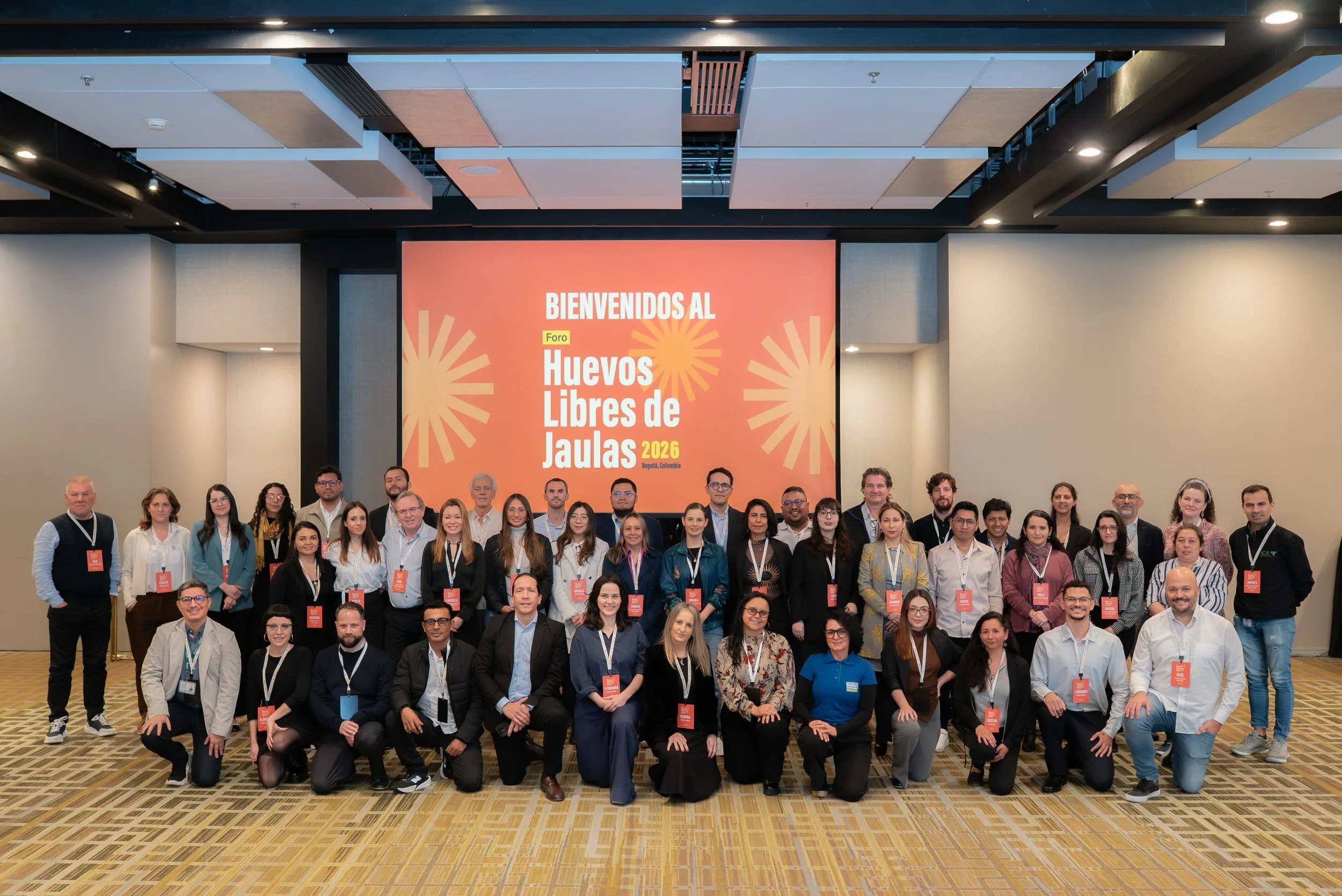
On October 9, 2026, in celebration of World Egg Day, Sinergia Animal hosted the Foro Libre de Jaulas in Bogotá, Colombia. The forum convened over 50 expert guests, policymakers, producers, and corporate stakeholders from Argentina, Brazil, Chile, Peru, and Colombia to address animal welfare and sustainable food systems across Latin America. The highlight of this regional gathering was the launch of Sinergia Animal’s technical report, titled “Cage-Free Eggs: The Global Transition Toward Better Business Models”. Developed by the Animal Welfare and Research team, this white paper underscores a fundamental transformation in global agriculture. Higher animal welfare standards are no longer viewed as optional corporate social responsibility, but as an essential commercial strategy driving market competitiveness, risk management, brand differentiation, and financial resilience. As the third-highest per capita egg consumer globally, Colombia occupies a pivotal role in this evolution. The evidence presented offers a roadmap for how Latin American industries, financial institutions, and governments can phase out battery cages while strengthening cage-free egg supply chains.
The Severe Toll of Battery Cages on Hen Welfare
Across the Global South, egg production remains heavily reliant on industrial battery cage systems. In these structures, laying hens are confined for their entire productive lives in metal cages where space per bird is usually smaller than an A4 sheet of paper. This confinement prevents hens from performing essential behaviors such as walking freely, perching, nesting, dust bathing, foraging, and fully spreading their wings. Evaluated through Mellor’s Five Domains Model, cage confinement inflicts severe physical and mental harm. Inability to fulfill biological drives causes negative emotional states, including chronic fear, frustration, and distress, which can manifest as abnormal stereotypic behaviors like feather pecking. Physically, lack of exercise combined with high calcium demand for eggshell formation accelerates bone resorption, leading to osteoporosis, bone fractures, foot lesions, and muscle atrophy.
The report addresses systemic ethical issues, such as the routine killing of billions of day-old male chicks globally each year via maceration or carbon dioxide asphyxiation: a practice driving prohibitions in France and Germany and which is accelerating interest in in ovo sexing technologies. Citing quantitative suffering models from the Welfare Footprint Project by Schuck-Paim et al. (2024), the report highlights that transitioning laying hens from battery cages to enriched cage-free environments prevents over 7,000 hours of cumulative pain and suffering for every single bird during her lifetime. Jhoan Barrero-Melendro, Master of Veterinary Science; docente at Fundación Universitaria Agraria de Colombia - co author of the report emphasized that technical reports, legislation, and consumer education provide the framework to transform food production.

Catalina Castaño - Corporate Accountability Lead - Sinergia Animal LATAM
Public Health Risks, One Health, and Environmental Sustainability
The case against battery cages in egg production extends beyond animal ethics, intersecting directly with human health and sustainability. Extreme density, genetic homogeneity, poor air quality, and physiological stress create ideal environments for pathogen emergence and transmission. Such conditions elevate the risk of zoonotic diseases and foodborne illnesses, including avian influenza and Salmonella contamination. The World Health Organization estimates foodborne enteric pathogens cause 1.8 million human deaths globally each year. To suppress disease in crowded systems, animal agriculture relies heavily on routine antimicrobial treatments. Globally, nearly 70% of all antibiotics sold are administered to food-producing animals, accelerating antimicrobial resistance (AMR), a critical crisis threatening medical efficacy.
Grounded in the One Health, One Welfare framework, Sinergia Animal’s report stresses that human health, animal well-being, and environmental stability are deeply interconnected. Animal agriculture occupies 83% of global agricultural land while supplying only 37% of protein and 18% of calories consumed by humans. Half of all global protein production feeds farmed animals.
Transitioning away from battery cages is a vital public policy measure to safeguard food safety, reduce antibiotic overuse, and build resilient food systems.
Colombia’s Market Leadership and Corporate Momentum
Colombia serves as a beacon of progress in Latin America’s transition toward cage-free egg production. According to FENAVI, Colombia produced 19.402 billion eggs in 2025, with per capita consumption reaching 366 eggs annually. Regionally, Argentina and Colombia lead per capita consumption and, together with Mexico, generate 12.2% of global egg production. The report states that across Latin America, roughly 87% of laying hens remain housed in caged systems, however in Colombia, conventional battery cages accounted for approximately 60% of egg output in 2021.
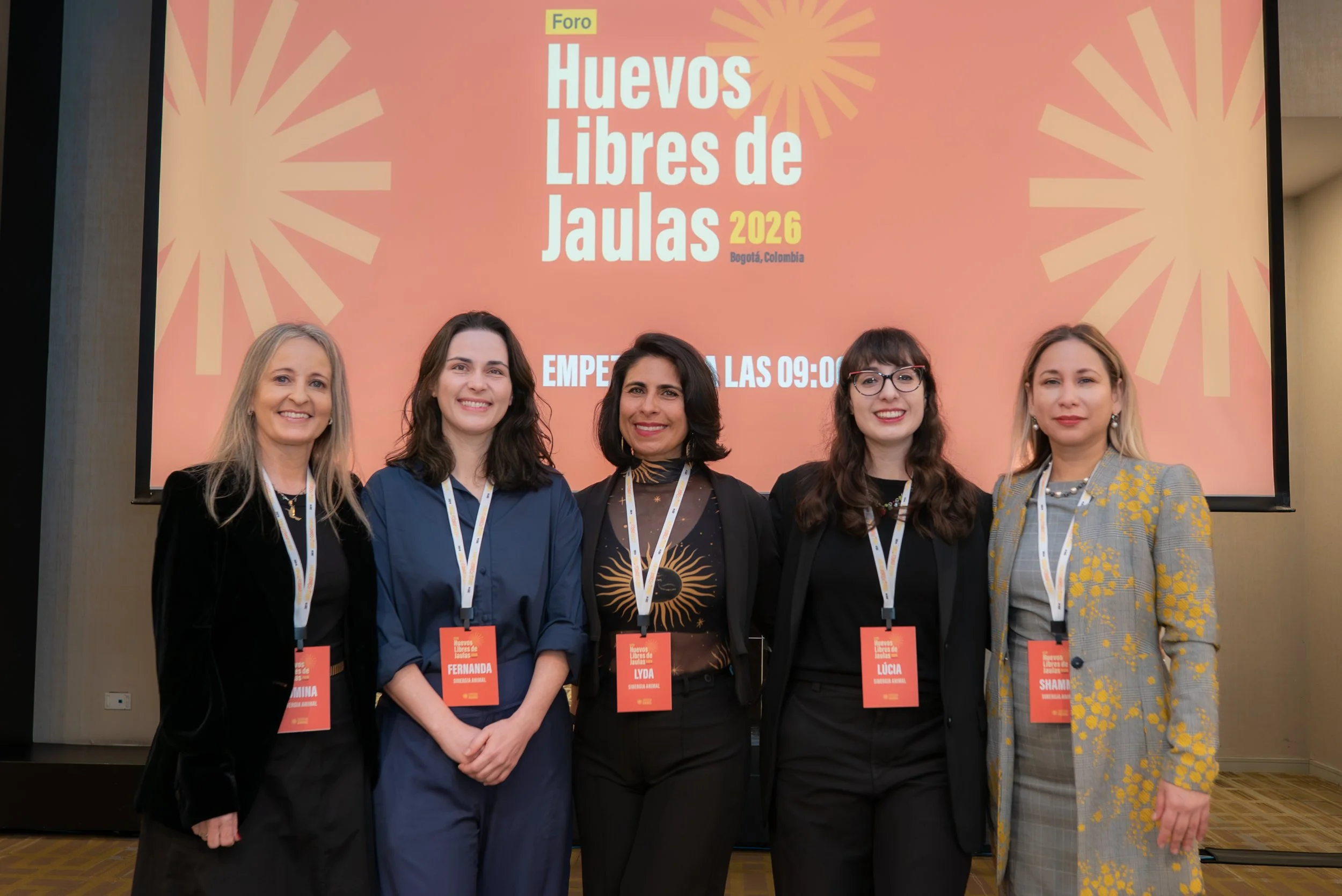
Lyda Durango, Executive Director of Sinergia Animal Colombia explained: “Colombia leads cage-free egg production in the region, accounting for approximately 30% of the country's production, according to the Welfare Footprint Institute. This demonstrates that an increasing number of companies in the market recognize that the transition is driven not only by ethical considerations, but also by sustainability, risk management, and competitiveness criteria. Our goal with this document is to provide evidence and create spaces for dialogue that will help accelerate this transition”.
This shift is driven by corporate cage-free commitments and evolving consumer expectations. Platforms such as Chicken Watch and Cage-Free Tracker document thousands of companies globally, including over a hundred operating across Latin America and Asia pledging to eliminate caged eggs from supply chains. Multinationals such as McDonald’s, Danone, Mondelēz International and Nestlé are all implementing cage-free procurement strategies. In Colombia, this trend is also attracting attention from investors and financial institutions, which are already incorporating animal welfare into their risk assessments, alongside the existing commitments of companies such as Wok, Juan Valdez, and Crepes & Waffles.
Financial Risk Management and Legislative Advances
Regulators worldwide are taking steps to improve farmed animal welfare. Conventional battery cages have been banned or restricted through legislation across the EU, New Zealand, Australia, Bhutan, India and in multiple U.S. states. Switzerland, Austria, Luxembourg, and Iceland have reached 100% cage-free production. Colombia in 2016 passed a landmark law recognizing animals as sentient beings. During the Foro Libre de Jaulas, Senator Andrea Padilla presented a new cage-free bill aimed at encouraging poultry producers through technological, commercial, and financial incentives, clear regulations, traceability systems, and mandatory product labeling.
The global transition to cage-free systems is driven by financial institutions and ESG criteria. Evaluation frameworks, including the FAIRR Initiative, BBFAW, the FARMS Initiative, and Bank for Animals, assess farm animal welfare to mitigate operational, legal, and reputational risks. Updated OECD Guidelines for Multinational Enterprises incorporate animal welfare standards, signaling that failing to address confinement poses commercial risks.
At the report’s launch event, Jhoan Barrero, co-author and Animal Welfare Specialist, emphasized that the white paper “was developed to reach producers, consumers, and the general public so that they understand the importance of transitioning to a cage-free system”. He also added that “through legislation, technical resources such as this one, and consumer education, we can change the way eggs are currently produced”.
Key Takeaways from the Foro Libre de Jaulas
The Foro Libre de Jaulas highlighted four key takeaways for advancing the cage-free egg transition across Latin America:
Overcoming Implementation Barriers: Addressing operational challenges regarding supply availability, logistics, traceability, and support for smallholders meeting corporate standards.
Public Policy Support: Utilizing legislative frameworks, such as Senator Andrea Padilla’s bill, to create favorable regulatory environments and commercial incentives.
Supply Chain Collaboration: Fostering direct coordination among food companies, producers, and technical experts to solve procurement bottlenecks.
Regional Knowledge Exchange: Leveraging insights from Argentina, Brazil, Chile, Peru, and Colombia to strengthen corporate engagement strategies.
Fernanda Viera, Director of Research and Animal Welfare at Sinergia Animal, stated that “the transition is already taking place in different regions of the world. Promoting spaces for dialogue among companies, experts, and other relevant stakeholders is essential to understanding the challenges, identifying opportunities, and moving toward increasingly sustainable food systems”. Connecting producers with buyers and aligning procurement with legislation bridges policy commitments and commercial execution.
Conclusion: Joining the Movement for a Cage-Free Future
Recognized by Animal Charity Evaluators (ACE) as one of the most effective animal protection NGOs globally, Sinergia Animal remains steadfast in its mission to reduce farmed animal suffering across the Global South. The report “Cage-Free Eggs: The Global Transition Toward Better Business Models” confirms that the phase-out of battery cages in egg production is progressing steadily.
As consumer demand for ethical products grows and financial institutions prioritize ESG criteria, businesses adopting cage-free egg supply chains will secure market access and build brand trust. The transition represents a win for animal welfare, public health, environmental sustainability, and commercial resilience. Sinergia Animal invites companies, producers, investors, policymakers, and consumers to collaborate for a compassionate, cage-free future.